- CompressConvertAI PDF
- Organize
- View & Edit
- Convert from PDF
- Convert to PDF
- SignMoreScan
- Home
- ›
- ›From PDFs to AI: The Digital Carbon Footprint Companies Are Ignoring
From PDFs to AI: The Digital Carbon Footprint Companies Are Ignoring
A new survey reveals that most employees and companies have no policies or awareness around the environmental cost of cloud storage and AI tool usage.
Every time a file gets saved, a query gets sent to an AI tool, or a document sits untouched in cloud storage, energy is being consumed, and most employees have no idea. Smallpdf surveyed 1,000 full-time U.S. employees to understand how aware workers and companies are about the carbon impact of their digital habits, from bloated file storage to daily AI tool usage.
Key takeaways
4 out of 5 employees weren't fully aware that storing large digital files in the cloud has a measurable carbon footprint.
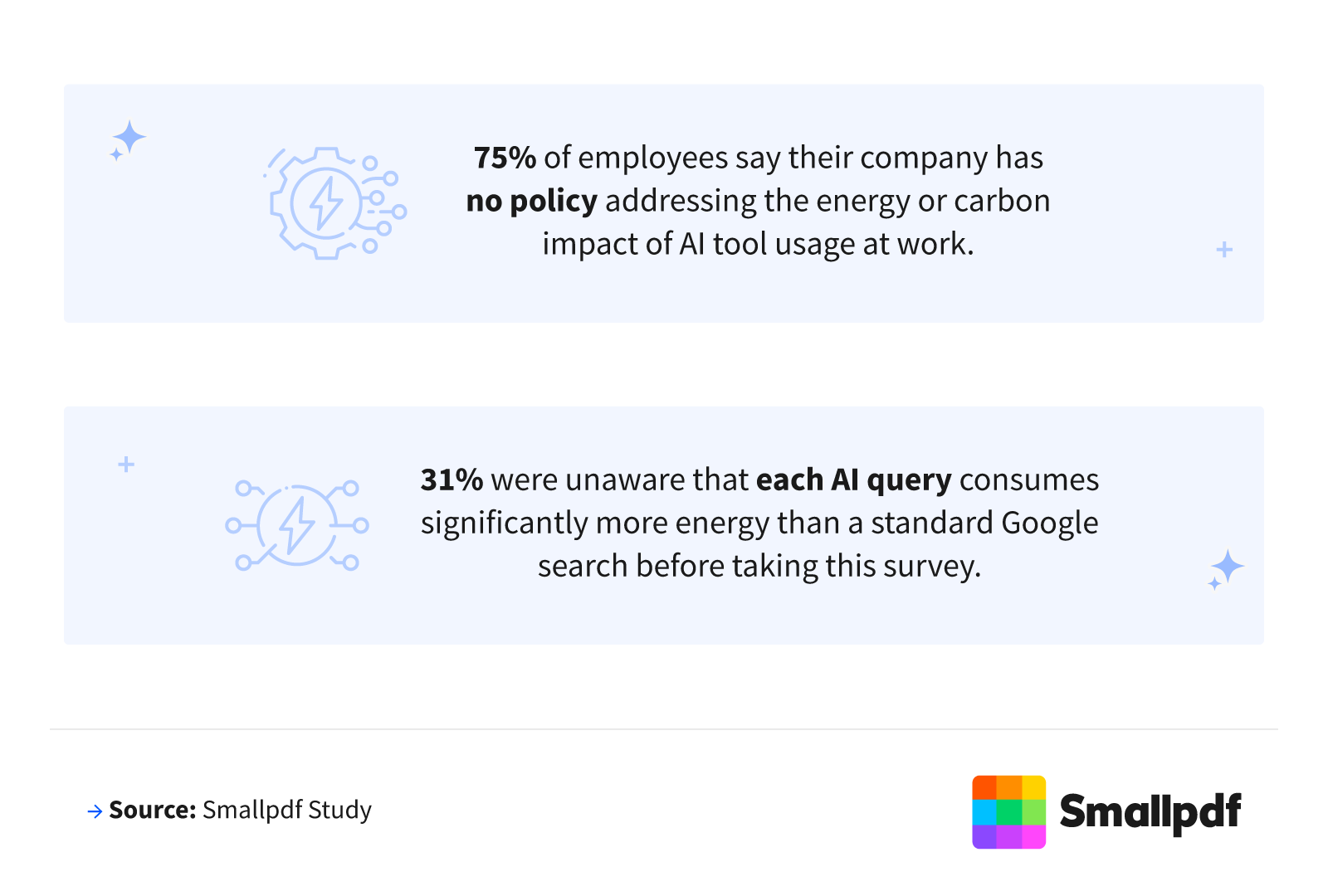
75% of employees say their company has no policy addressing the energy or carbon impact of employee AI tool usage.
31% of employees were unaware that each AI query consumes significantly more energy than a standard Google search.
Nearly 1 in 3 employees (32%) say IT or technology teams should be responsible for reducing digital waste.
45% of companies have never conducted a digital waste audit.
Just over 1 in 10 (13%) employees said their company tracks the carbon footprint of software tools or digital workflows
The Carbon Audit Companies Are Missing
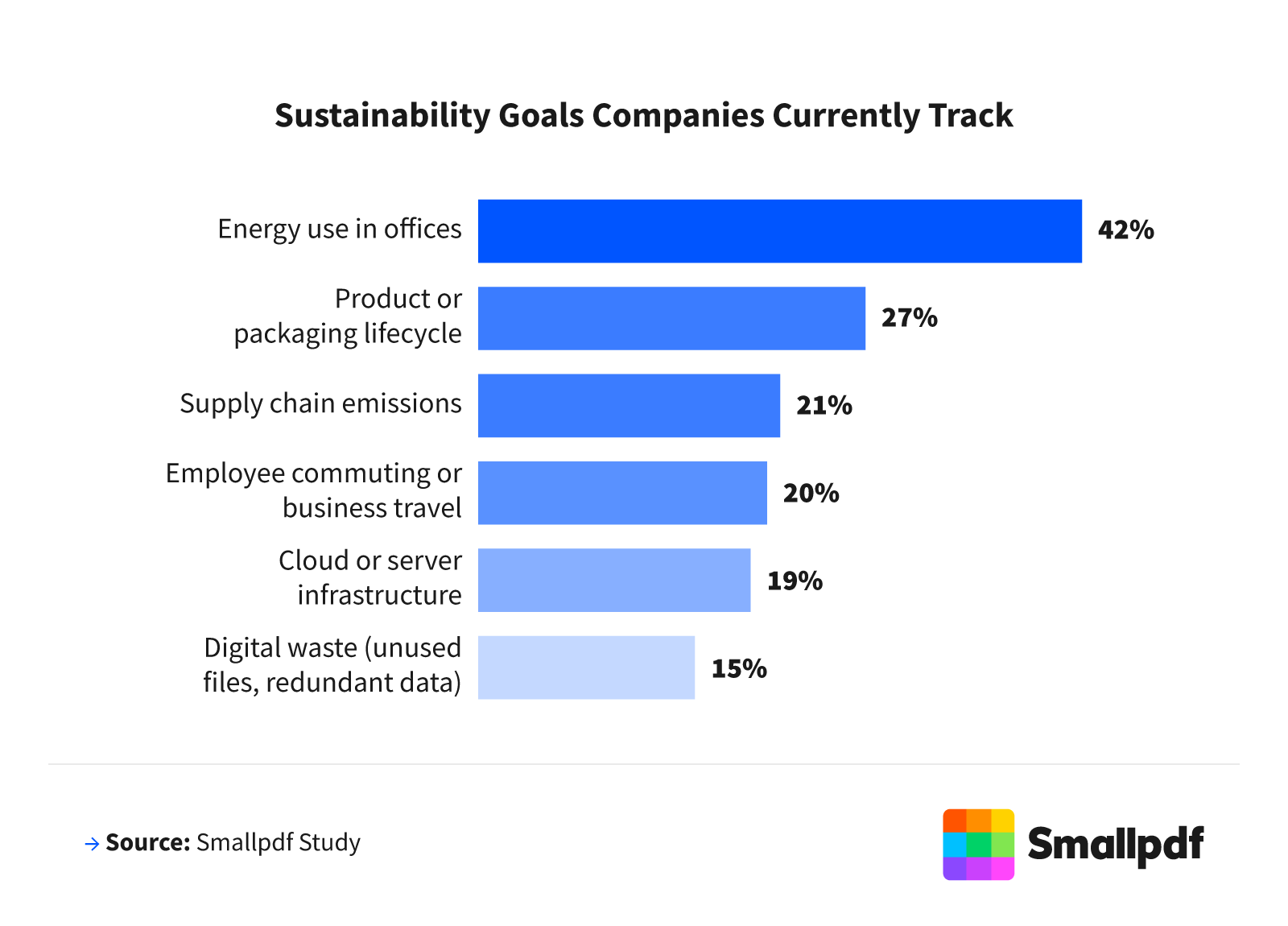
Many companies track energy use in their offices and measure supply chain emissions, but a growing source of environmental impact is hiding in plain sight: the files, folders, and cloud infrastructure that power everyday work. Research has shown the high ecological costs of data storage and the cloud, yet many employees remain unaware that this cost exists.
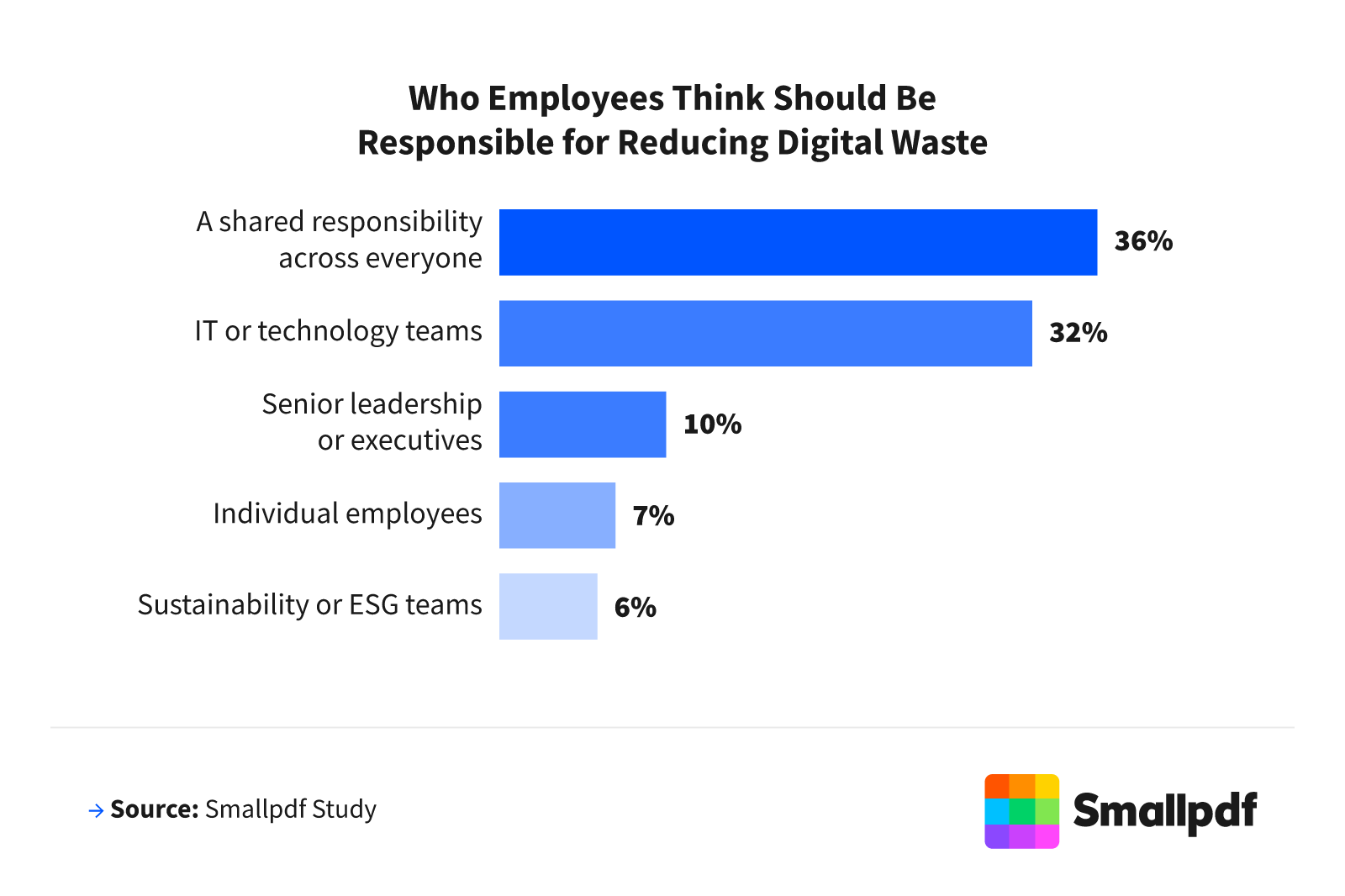
Awareness is a big part of the problem. Overall, 80% of employees were not fully aware that storing large digital files in the cloud carries a carbon footprint. When asked who should take responsibility for reducing digital waste, the largest share of employees (36%) said it should be a shared responsibility across everyone, while 32% pointed to IT or technology teams specifically.
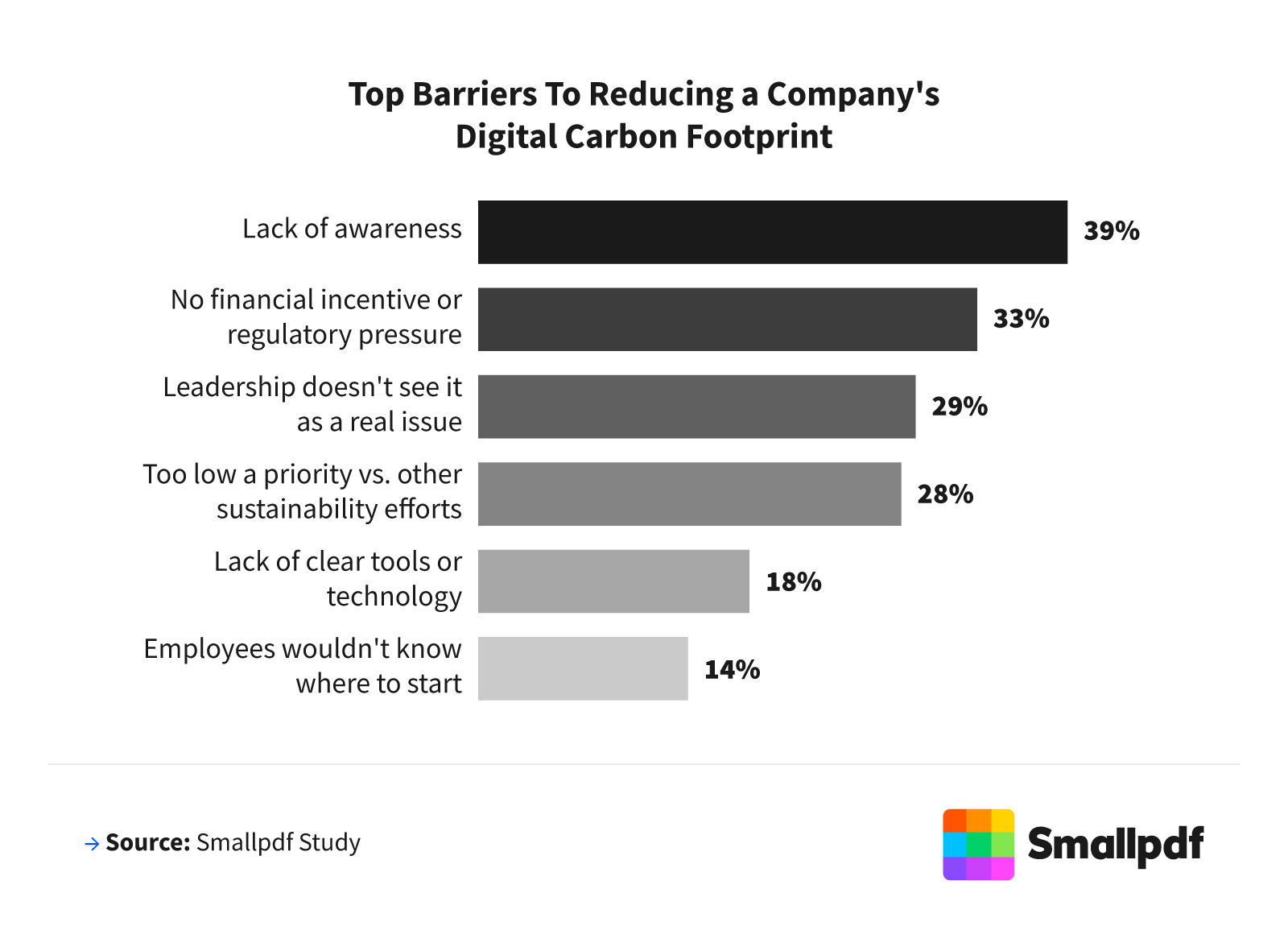
The AI Blind Spot
AI tools have become a fixture of the modern workday, but their environmental cost is largely going unexamined by both the employees using them and the companies enabling their use.
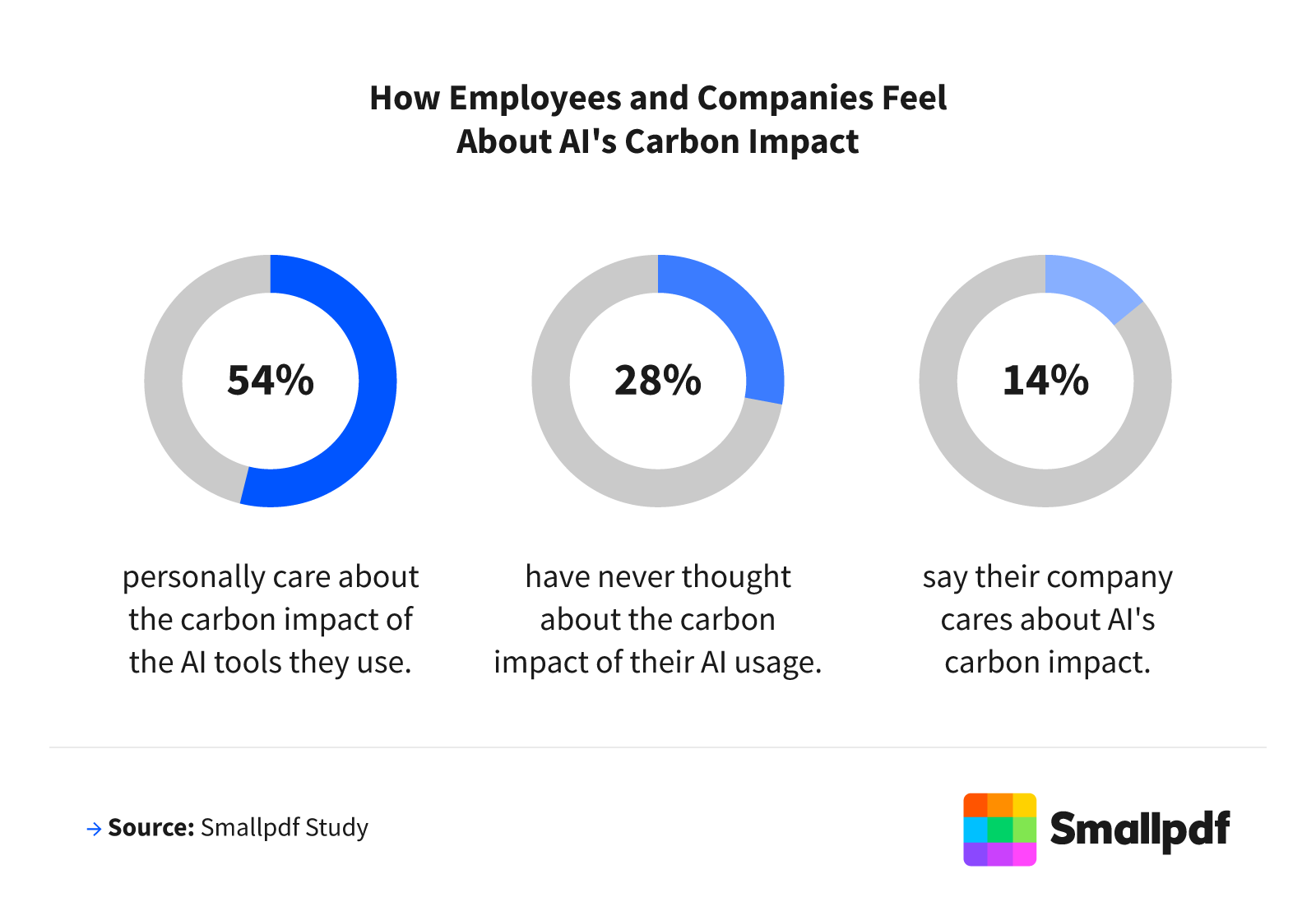
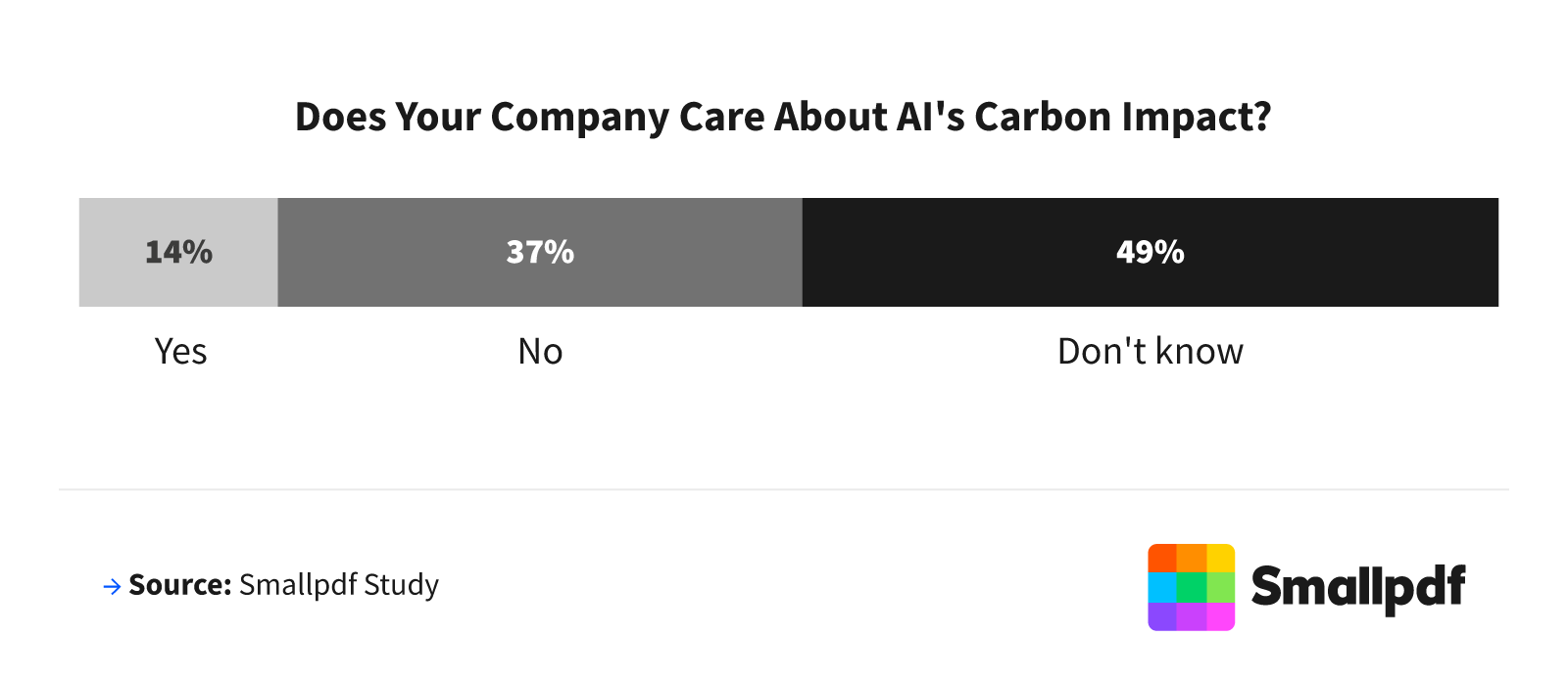
The Sustainability Blind Spot
Even companies that do have sustainability programs in place are largely leaving digital operations out of the picture, treating cloud infrastructure and digital workflows as separate from their environmental responsibilities.
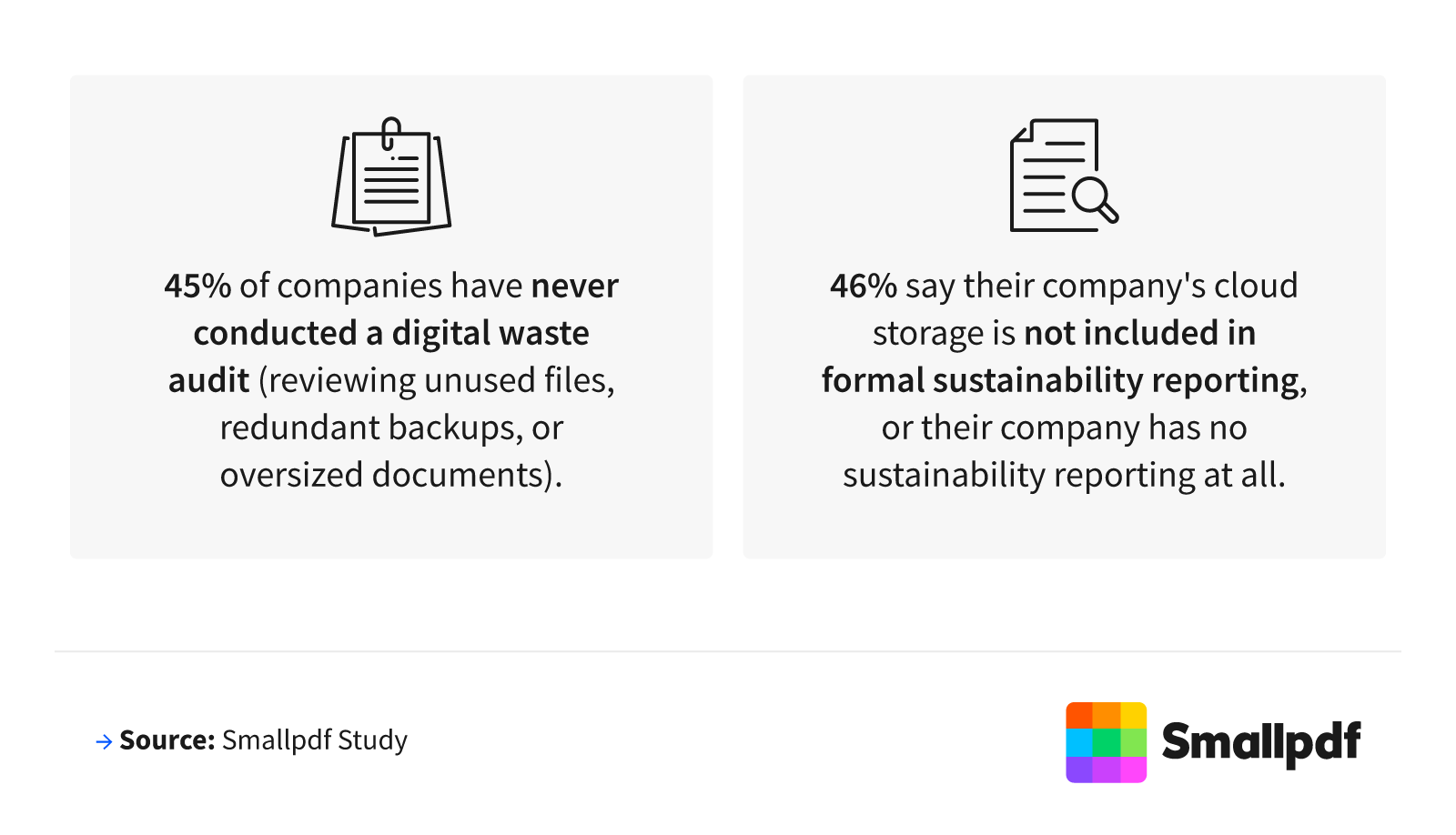
Looking ahead, 24% of employees said their company is somewhat or very likely to act on digital carbon in the next 12 months, suggesting that meaningful change may still be a long way off for most organizations.
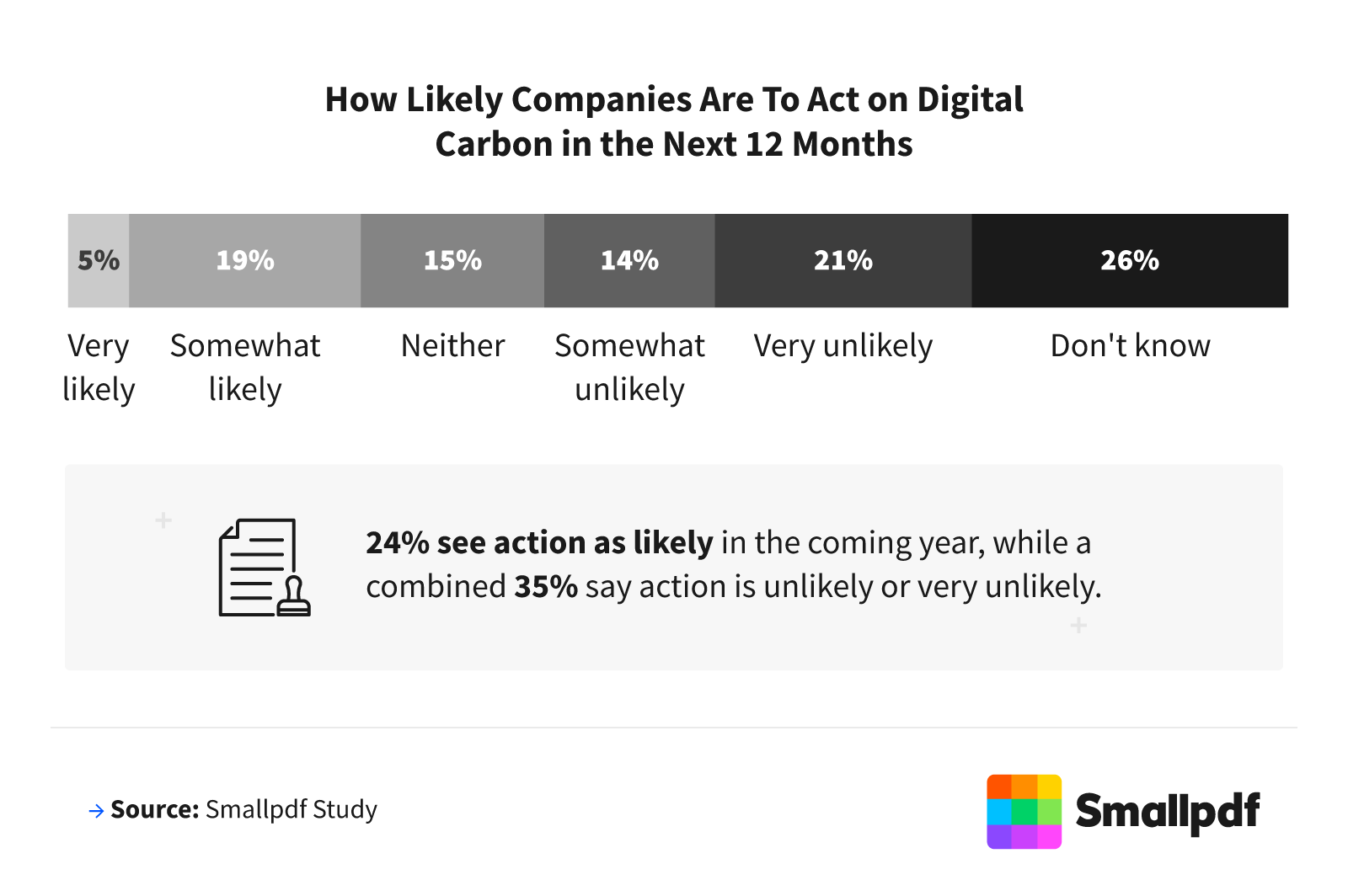
What the Numbers Are Telling Us
Digital sustainability is still treated as someone else's problem, or not a problem at all. Companies that are serious about reducing their environmental impact will need to bring their digital operations, cloud storage, file management, and AI tool usage into the same conversation as office energy use and supply chain emissions. Starting with a digital waste audit, establishing clear policies around file storage and AI usage, and building awareness among employees are all practical first steps that any team can take.
Methodology
Smallpdf surveyed 1,000 U.S. full-time employees in March of 2026. Respondents were 52% men and 47% women. By generation, 58% were millennials, 26% were Gen X, and 13% were Gen Z. Industries represented include technology/software (17%), healthcare/pharmaceuticals (14%), education (12%), finance/banking/insurance (10%), government/public sector (8%), manufacturing (7%), and retail/e-commerce (6%), among others.
About Smallpdf
Smallpdf is a leading online document platform trusted by millions of users worldwide to simplify how they work with PDFs and digital files. From compressing and converting documents to signing and editing them, Smallpdf offers a full suite of tools designed to help individuals and businesses work more efficiently while keeping file sizes lean and manageable. As digital carbon footprints come under increasing scrutiny, tools that reduce unnecessary storage and streamline document workflows are becoming an important part of a smarter, more sustainable workday.
Fair Use Statement
The data and findings in this article are intended for noncommercial use only. If you share or reference this content, please provide a link back to the original study and an attribution to Smallpdf.
Related Articles